Basketball Size Chart: Which Ball for Which Age (Sizes 3 to 7)
Besthoopslab is reader-supported. As an Amazon Associate, we earn from qualifying purchases.
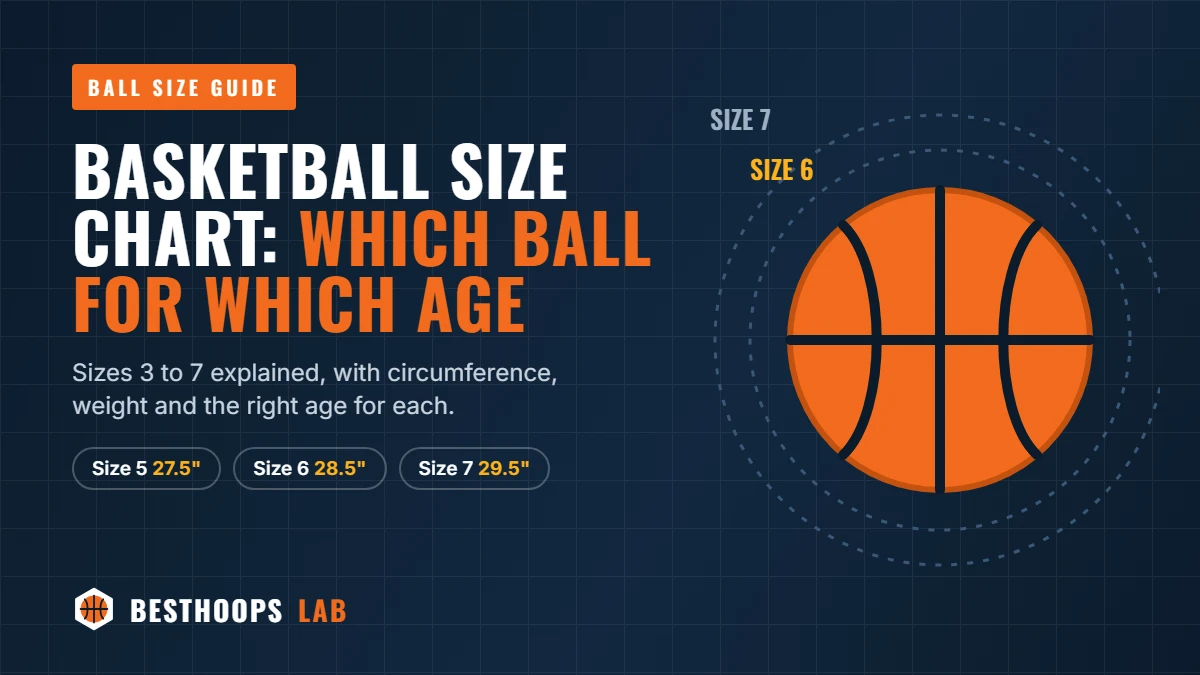
Quick answer: Men and boys 15 and older use a size 7 ball (29.5″). Women, girls 12 and up, and boys 12–14 use a size 6 (28.5″). Kids ages 9–11 use a size 5 (27.5″), and kids ages 5–8 use a size 4 (25.5″) or a size 3 (22″) mini ball.
A ball that is too big and too heavy is the most common reason young players develop a two-handed “push” shot. Picking the right size is cheap, fast, and makes practice far more productive. Here is everything you need to know.
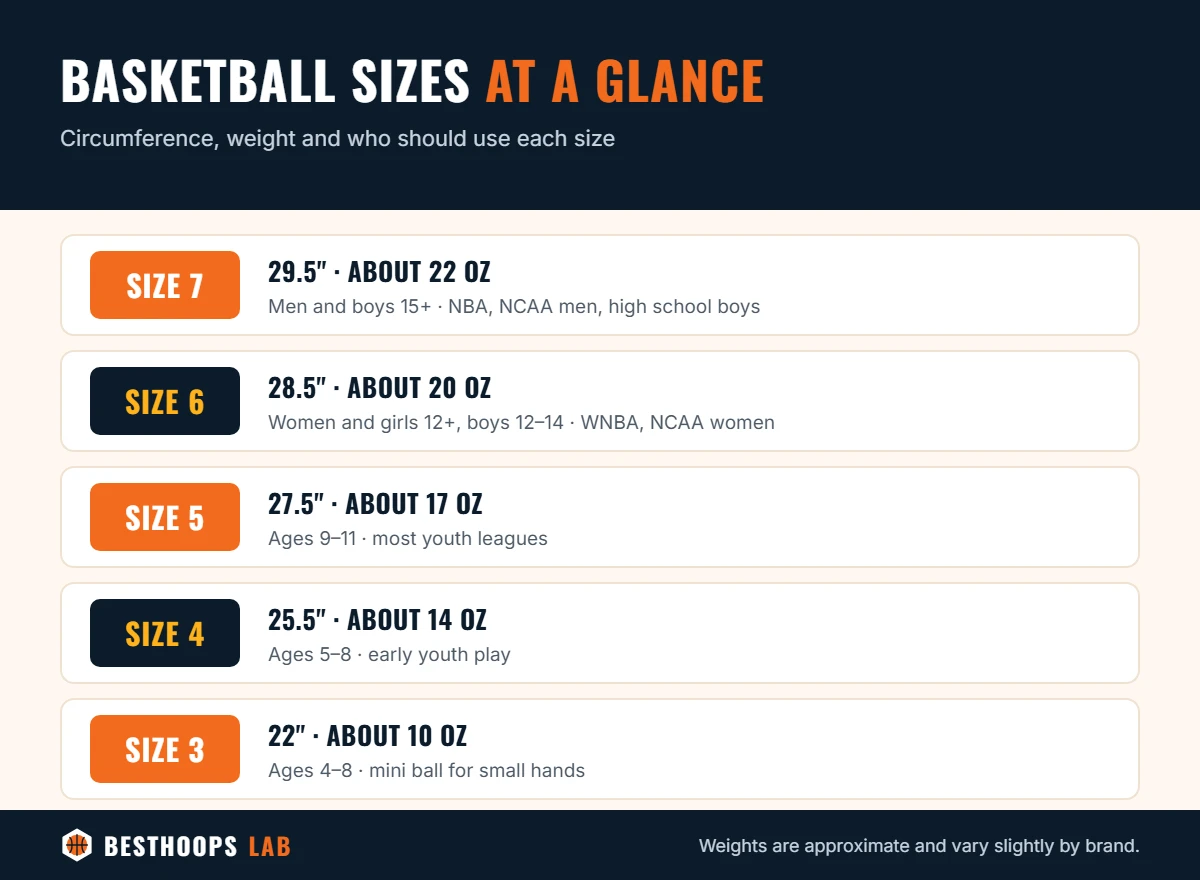
Basketball Size Chart
| Size | Circumference | Approx. weight | Who uses it |
|---|---|---|---|
| Size 7 | 29.5″ | 22 oz | Men and boys 15+, NBA, NCAA men, high school boys |
| Size 6 | 28.5″ | 20 oz | Women and girls 12+, boys 12–14, WNBA, NCAA women |
| Size 5 | 27.5″ | 17 oz | Boys and girls ages 9–11 |
| Size 4 | 25.5″ | 14 oz | Kids ages 5–8 |
| Size 3 | 22″ | 10 oz | Kids ages 4–8, mini ball |
Weights vary by a few ounces between brands and materials, so treat these as close estimates. Your league’s rulebook always has the final word.
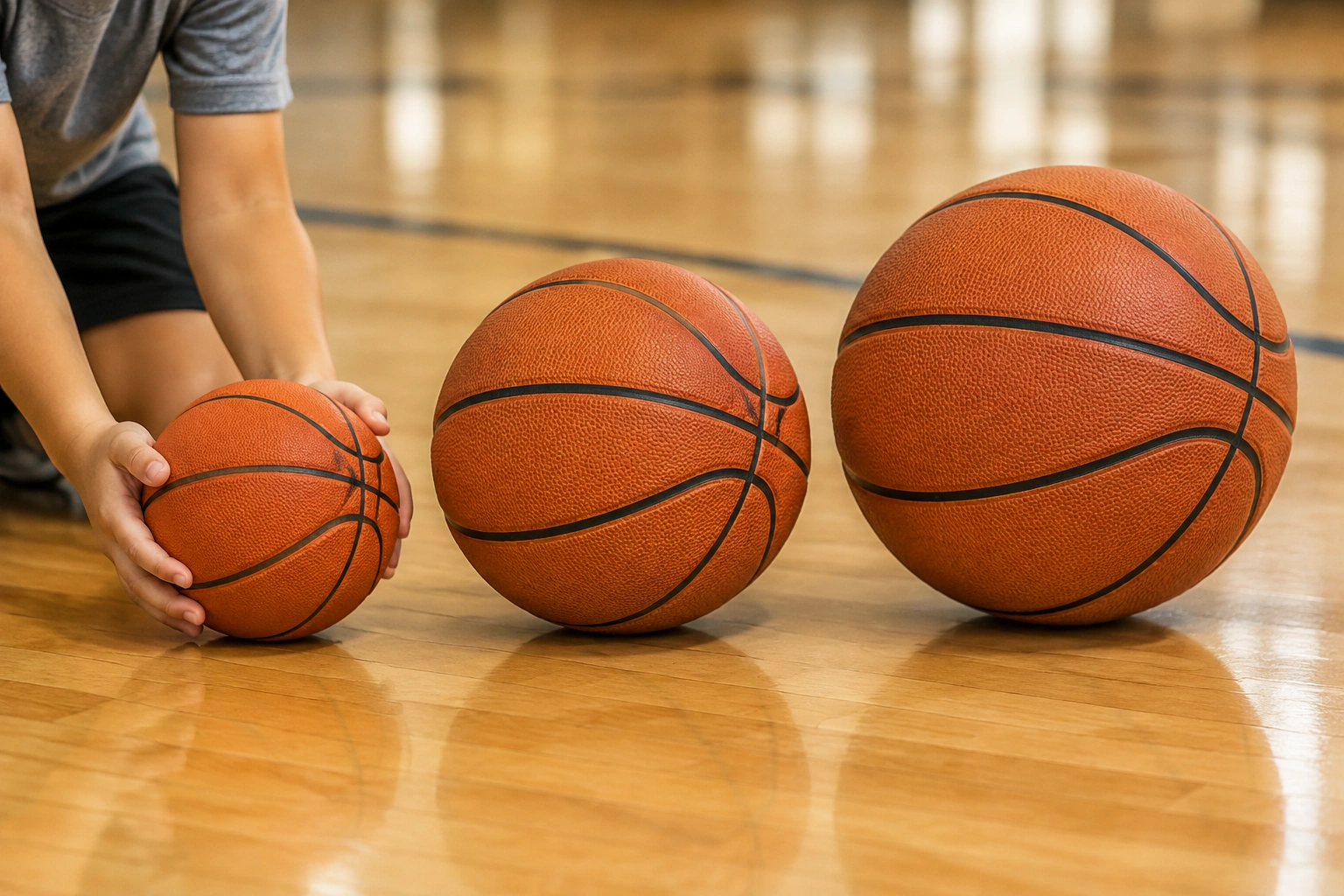
Why Ball Size Matters
- Shooting form: a smaller ball lets kids shoot with one hand, the way they will shoot for the rest of their lives.
- Ball handling: small hands can control and protect a smaller ball, so dribbling skills develop faster.
- Confidence: more makes and fewer turnovers keep kids interested in the game.
- Injury prevention: a lighter ball puts less strain on young wrists and fingers.
Each Size Explained
Size 7 (29.5 inches): The Official Men’s Ball
Size 7 is the standard for the NBA, men’s college basketball and boys’ high school basketball. Most boys move up to it around age 15, when their hands are big enough to control it with one hand.
Size 6 (28.5 inches): The Official Women’s Ball
Size 6 is used in the WNBA, women’s college basketball and girls’ high school play. It is also the right step for boys ages 12–14 before they move to size 7. Many players call it an “intermediate” ball.
Size 5 (27.5 inches): The Youth Ball
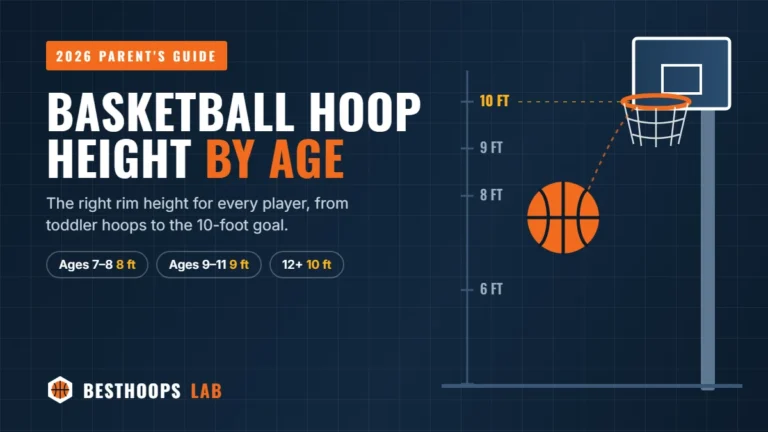
Size 5 is the go-to ball for ages 9–11 and the most common size in youth leagues. Pair it with a hoop at around 9 feet. See our hoop height by age guide for the full chart.
Size 4 (25.5 inches): Early Youth
Size 4 works well for kids ages 5–8 who are starting to learn real dribbling and shooting. It is light enough to shoot at a lowered hoop without heaving.
Size 3 (22 inches): The Mini Ball
Size 3 is a mini ball for ages 4–8. It is perfect for toddler hoops, indoor play and ball-handling drills. Older players also use mini balls to sharpen their dribbling.
How to Choose the Right Size
- Check your league rules first. Practice with the same size your child plays with in games.
- Use the hand test. Your player should be able to hold the ball in one shooting hand with the guide hand on the side, without it slipping.
- Watch the shot. If the ball starts from the chest or hip, it is probably too big or the rim is too high.
- Size down when in doubt. Moving up a size later is easy. Unlearning a bad shot is not.
Indoor vs Outdoor Balls
Size is only half the decision. Indoor balls usually have leather or soft composite covers that feel great on hardwood but wear out fast on concrete. Outdoor balls use tougher rubber or durable composite covers built for asphalt. If your child plays mostly in the driveway, choose an outdoor or indoor/outdoor ball in the right size.
Frequently Asked Questions
What size basketball is used in high school?
Boys’ high school basketball uses a size 7 ball. Girls’ high school basketball uses a size 6.
What size basketball should a 10-year-old use?
Most 10-year-olds should use a size 5 ball (27.5″). It is the standard for ages 9–11 in most youth leagues.
Is a size 6 basketball good for adults?
Yes. Size 6 is the official ball for women’s basketball at every level, and many adult men like it for casual shooting practice because it is a little easier to control.
Where is the size printed on a basketball?
Most brands print the size (for example “Size 6” or “28.5”) near the logo or the inflation valve.
The Bottom Line
Match the ball to the player’s hands and league: size 3 or 4 for young kids, size 5 for ages 9–11, size 6 for women and young teens, and size 7 for men and boys 15 and up. The right ball makes every practice count.